Defining a Data Dictionary
A data dictionary collects and holds a set of logical data.
It can be broken down into logical data areas. See Logical and Application Data Areas.
The Elements of a Data Dictionary
A data dictionary is used to describe all the elements defining your logical data architecture:
• Classes
• Attributes
• Parts
• etc.
Accessing the elements of a data dictionary
To access the elements of a data dictionary in HOPEX Information Architecture :
1. Click the navigation menu then Data Architecture > Logical Data Assets.
2. In the edit area, click Data Dictionaries then the Hierarchy View.
3. Expand the data dictionary that interests you.
Elements that make up the dictionary appear.
Importing logical data
You can import existing logical data into your repository using an Excel file. See Importing Logical Data from an Excel File.
Package
A data dictionary is implemented by a package that collects data such as classes, data areas, data maps, etc. You can create sub-packages.
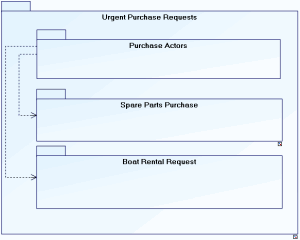
Urgent purchase requests are provided to process purchase of spare parts and boat rental requests. In both of these cases, users are actors of the purchasing domain.
 For more details on the use of packages, see the HOPEX Application Design guide.
Class diagrams are used to graphically represent the elements of a package.
See The Class Diagram.