NSV-3 Resources-Resources Matrix
NSV-3 provides details about the interface characteristics described in NSV-1 for the architecture, arranged in matrix form.
NSV-3 gives a quick overview of all the interface characteristics presented in multiple NSV-1 diagrams. The matrix form facilitates making rapid assessments of the potential commonalities and redundancies (or, if fault-tolerance is desired, the lack of redundancies).
NSV-3 is a useful tool for managing the evolution of systems and system infrastructures, the insertion of new technologies/functionalities, and the redistribution of systems and processes with evolving operational requirements.
Users can easily access NSV-3 reports in the NAF navigation tree. No other objects are displayed since the aim is to synthesize information already designed in the NSV-1 section.
The NSV-3 Report Template
The NSV-3 Report template synthesizes information about the system interfaces in a matrix.
The first parameter is used to indicate the architecture to be analyzed.
The second parameter, the System Subset is optional. This is used to reduce the scope of the study to a subset of the systems defined in the architecture. If this parameter is not set, all the systems defined in the architecture are taken into account. The subset can be defined by setting systems.
The NSV-3 Resources to Resources Channel Matrix Chapter
This chapter displays a squared matrix of systems which indicates if systems are connected to other systems through communication channels. The systems are organized in rows and columns.
Each cell in the matrix represents the communication channel between a system in row and a system in a column. If a communication channel exists between two systems, the corresponding cell contains a black dot.
Diagonal cells dealing with the same source and target are grayed.
The NSV-3 Resources to Resources Interaction Matrix Chapter
This chapter displays the system components that should be able to interact with each other. The system interaction information is displayed in a matrix. The selected systems are organized in rows and columns.
Each cell in the matrix represents the interface between a system in row and a system in a column. If an interface exists, the corresponding cell contains a black dot.
Diagonal cells dealing with the same source and target are grayed.
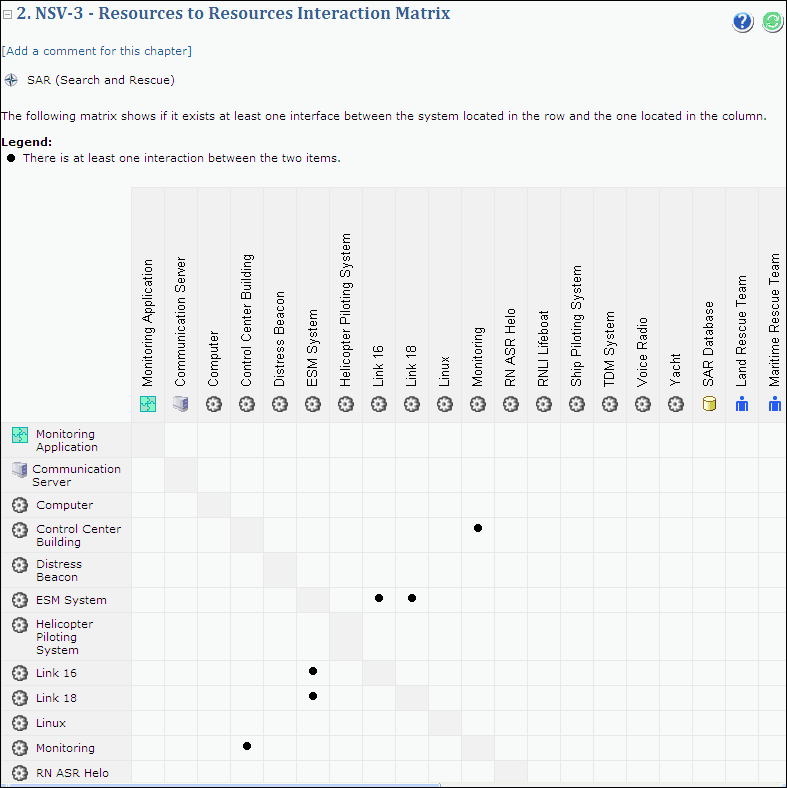
Example of an NSV-3 Resources to Resources Interaction Matrix