Using Realization Matrices
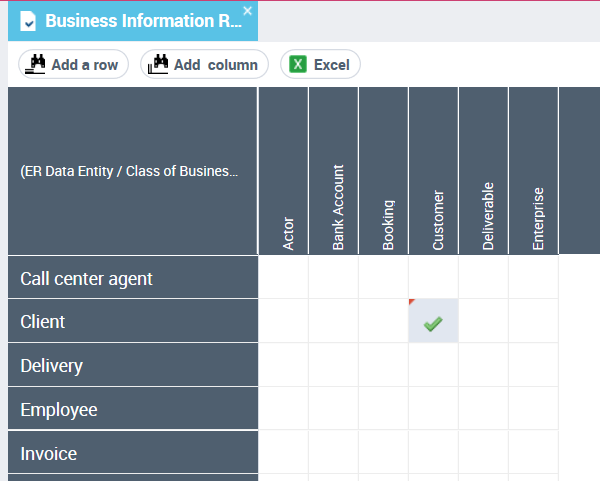
Realization matrices allow you to define and view the realization links between objects in the repository.
Example
Realization of business data by logical data
This matrix is used to specify that logical data (classes, data views, etc.) realize business information (concepts, concept types, etc.).
Realization Levels
Business Information X Business Information
This matrix is used to specify that business data (concepts, concept types, etc.) realize other business information.
Business Information X Logical Data
Realization of business data by logical data
Business Information X Metadata
Realization of business data by metadata
Logical Data X Logical Data
Realization of logical data by other logical data
Concept Domain Maps by Data Domain Maps
Realization of concept domain maps by data domain maps
Concept Domains X Logical Data Domains
Realization of concept domains by logical data domains
Logical Data Domains X Data Domains
Realization of logical data domains by data domains
 The realization of logical data (classes, data views, etc.) by physical data (tables, table views, etc.) takes place via the synchronization tool. See "Synchronizing logical and physical models".
Creating a Realization Matrix
To create a realization matrix in HOPEX Data Governance:
1. Click the navigation menu then Tools > Data realization.
2. In the edit area, select the type of matrix to be created.
3. Click New.
The matrix appears in the edit area.
4. Add the data that realizes it in a row and the data realized in a column.
5. To specify that one object realizes another object, click on the cell of the matrix that connects the two objects in question.