Describe a Data Lineage
A data lineage is used to describe the processing procedure for information and data transformation rules, from the source up to restoration. It thus facilitates the identification of errors in processing and reduces the risk of data non-compliance.
You can create lineages on business, logical and physical level data.
Creating a Data Lineage and its Diagram
You can create a data lineage on a concept, a class or a table.
Creating a data lineage
To create a data lineage in HOPEX Information Architecture:
 Click the icon of the data for which you want to create a lineage and select New > Data Lineage (business, logical or physical depending on the type of data).
The data lineage diagram opens in the edit area.
All the lineages created can be accessed via the navigation menu Operational Assurance > Data Lineages.
Initializing the diagram
When the data described by the lineage is used in content that exists or is associated with calculation rules, the Initialize the Diagram option appears; it is used to initialize the diagram with the content and rules in question.
More precisely, initialization is based on:
• the content that carries the data item in the exchange flows between the software (applications, Application Systems, etc.), described in the flow scenarios.
Scenario software is used to initialize the data sources in the lineage. Flow transition, its reception and its direction in the scenario enable initialization of data processing, its transitions and directions.
When the tasks performed by the software of a scenario are detailed in an application process for example, they also appear in the lineage processing nodes.
• the calculation rules available for this data item. The information defined as input parameters of these rules initialize the original nodes of the lineage.
To initialize the diagram with the content or the calculation rules, select the corresponding option check box.
Initialization example
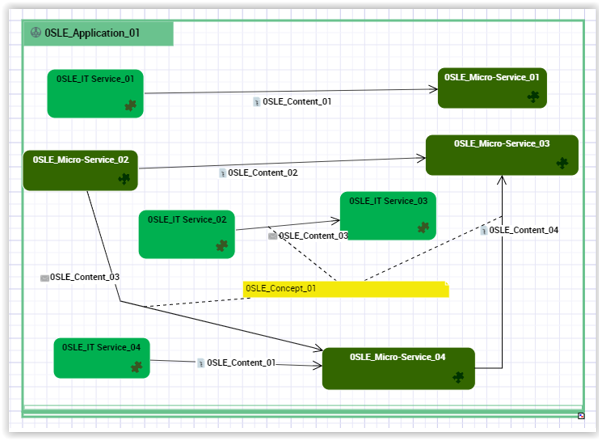
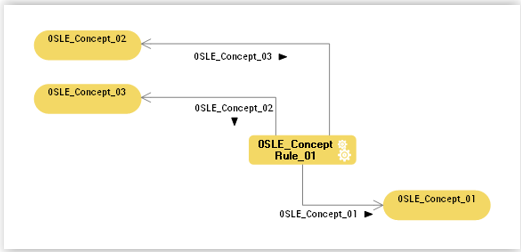
This is the "OSLE_Concept_01" concept on which you will create a data lineage business. This concept is associated with the following information:
• it is used in the flow exchange between software applications, described in the scenario diagram of the application flow below.
• it is defined by a calculation rule, described below.
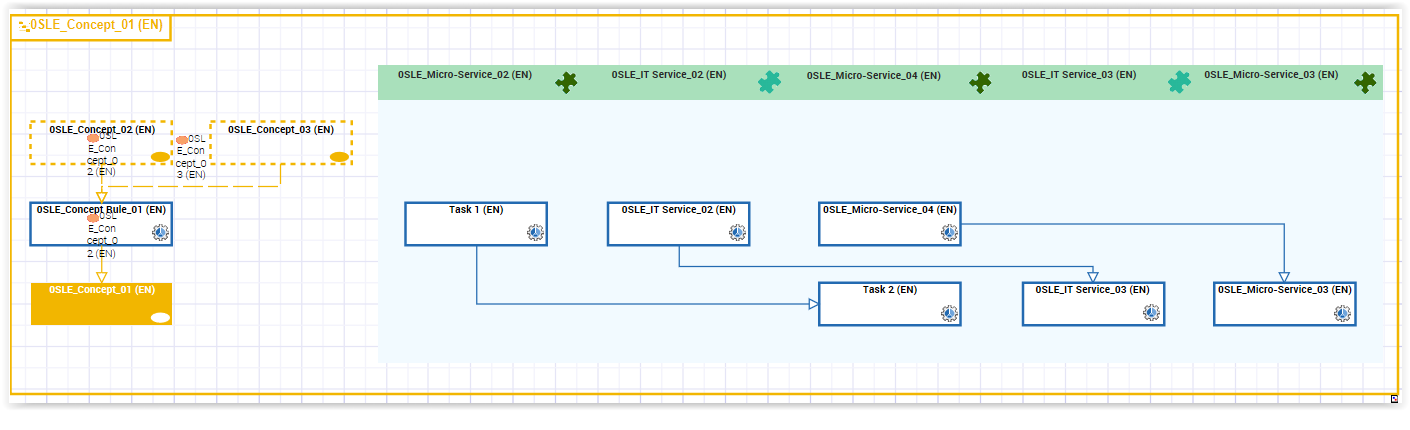
During the initialization of the lineage diagram on the "OSLE_Concept_01" concept, two initialization options are offered to you turn by turn; one for taking into account existing flows and one for taking into account the existing rule.
The initialization creates the following diagram:
Lineage objects
Participant
A participant is used to define where a processing takes place. This can be an org-unit or a position.
Steps
Original data item
This is the data item at the origin of the data lineage.
Data processing
Processing is the collection and handling of data elements to produce significant information.
A process can be represented by:
• a business, logical or physical data item
• A software system (application, application service etc.), described in a flow scenario
• A task of an application process that describes the software system.
Data quality measurement
A data quality measurement checks that the data issued by a process is compliant with the quality requirements. It is therefore used to prevent risks (erroneous or missing data for example) linked to data calculation or processing.
In the lineage diagram you can connect existing measurements.
To access all data quality measurements, click the navigation menu then Operational Efficiency > Data Lineages > Quality Measurement Inventory.
Processing software
These are software systems that perform data processing. You can select one of the following elements as a software source:
• Application System
• Application
• Micro-service
• IT dept
You also display the traceability of data use at the software level. The software system can be under the responsibility of an org-unit or a type of position.
You can define the following in the software system:
• data stores (data areas) that contain the saved information (original data, data flows, etc.), the CRUD defined.
• software components that access the data store
• application processes where the data is processed
Technology
The technologies represent the components required for the operation of software (servers, operating systems, etc.) that are part of the data lifecycle.
Transitions
Transitions include:
• Transition Edge: transition between the data lineage steps
• Data flow: transition through which new data is supplied
• Result flow: the target step of this transition is the resulting data item.