Use Case Associations: Extensions and Uses
When the system to be described is large, it is useful to have modeling mechanisms that can be adapted to the desired level of detail.
Definitions

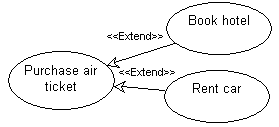
When a use case includes several alternatives or exceptions, these are represented separately as relationships that extend the standard use case.
Examples of extension:
• The purchase of an airline ticket can also include booking a hotel room or renting a car.
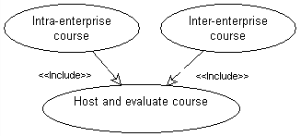
An inclusion association enables insertion into a particular use case of behavior common to several use cases. This use case only has meaning when used as part of another use case.
Examples of inclusion:
• In a training organization, the "Host and Evaluate Course" use case is common to use cases:
• Inter-enterprise course (where the participants come from several different companies)
• Intra-enterprise course (where the participants all come from the same company)
• In a commercial enterprise, the "Issue Order" use case can reuse the following use cases:
• Provide client information
• Place a manufacturing order
• Propose a payment method
Connecting Use Cases
To indicate that one use case is an extension of another:
1. In the diagram insert toolbar, click button

2. Click the use case, for example "Consult Catalog" and drag the mouse to the extension case, for example "Process Order" before releasing the mouse button.
The link appears in the diagram, labeled “Extend”.
To indicate that one use case includes another:
1. In the diagram insert toolbar, click button

2. Click the use case, for example "Process Order" and drag the mouse to the extension case, for example "Choose Payment Mode" before releasing the mouse button.
The link appears in the diagram, labeled “Include”.