The NOV-4 Report Template
Like all the other subviews, the NOV-4 report template comes with an architecture parameter that is used to specify the architecture to be described.
This parameter is completed by an optional parameter: Org-Unit Subset:
• If no value is set, all the org-units defined in the architecture are taken into account.
• If values are specified, only the given org-units are used to generate the report.
The NOV-4 Org-Unit Composition Hierarchy Chapter
This chapter details the hierarchy of org-units.
For each org-unit the type and comment are displayed. The table is composed of expandable items that reveal the complete structure of the root org-units.
If org-units are set in the Org-Unit Subset parameter, only these org-units are used to generate the hierarchy. They are used as the roots of the generated structures.
If a set org-unit is contained in a structure of another set org-unit then the structure for this org-unit is not repeated.
All the organizational charts including at least one of the cited org-units are inserted in the chapter.
The NOV-4 Org-Unit Specialization Hierarchy Chapter
The Org-Unit specialization hierarchy chapter shows how the different org-units of the architecture are specialized.
The specializations actually refer to variants of org-units. These variants are created to add more detail and specifics to fit particular scenarios of the architecture. They can be created by using the New > Variant command of the org-unit to be varied (specialized).
To show the specializations, the report displays:
• a table with the varied objects,
• their variants,
• the libraries to which they belong
• their comments.
 It is important to note that not only org-units with variants are displayed in the report.
All the org-units of the architecture are displayed if no org-unit subset was specified in the report template.
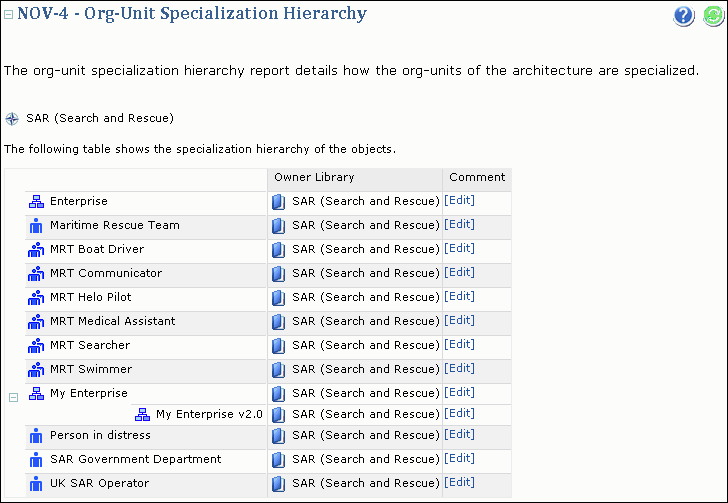
Example of an Org-Unit Specialization Hierarchy Chapter
The NOV-4 Org-Unit Generalization Hierarchy Chapter
This chapter shows how the different org-units of the architecture are generalized. The variants of org-units are presented in table form along with the varied org-units (org-units from which the variant was created).
The comments and library to which the org-units belong are also presented.
 To add a new generalization, use the Connect > Variant Of command of the specialized item (variant).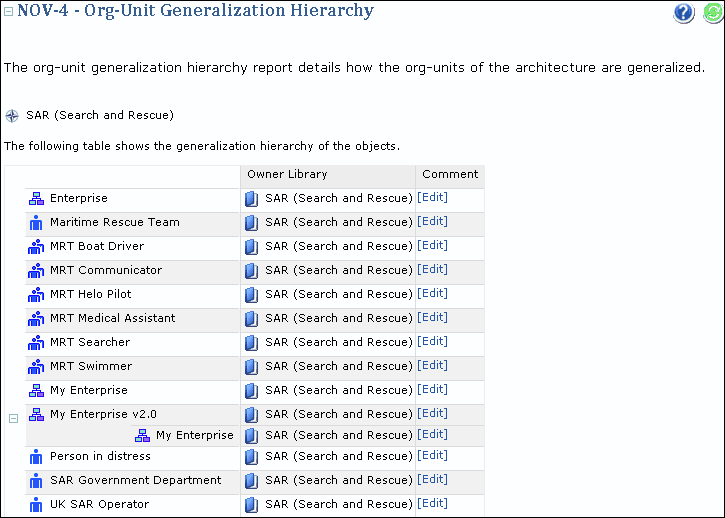
The NOV-4 Org-Unit Dictionary Chapter
This chapter creates an alphabetical list of:
• all org-units mentioned in the Org-Unit Subset parameter
• all org-units of the architecture if no subset is mentioned.
For each org-unit in the table, the list of direct sub-org-units is displayed.
Diagrams are also inserted in the chapter.
The NOV-4 Competence Dictionary Chapter
This chapter presents list of all the competences of the architecture. The org-units that are linked to the different competences are also displayed.
The NOV-4 Org-Unit Responsibility Chapter
This report chapter lists the org-units of the architecture or those mentioned in the Org-unit subset of the analysis report.
It details the operations that are performed by these org-units and indicates the organizational processes for which they are responsible.
Statistical values concerning the maximum, minimum and average number of operations performed per org-unit and the equivalent values for the assigned processes are also displayed.
Organizational processes are assigned in the Properties dialog box of the Org-units, Responsibility section.
The operations performed by org-units are retrieved in the report through the use of participants. Org-units are attached to participants in the Organizational Process Diagram. Operations are then added to participants in the diagrams.
The list of Organizational Processes is found in the NOV-6c subview. For more information, see NOV-6c Operational Event-Trace Description.
The NOV-4 Type and Actual Organizations Mapping Overview Chapter
The org-unit "type" is the generic org-unit or an org-unit template created for a particular purpose and on which actual org-units can be based.
Org-units can then be created and mapped to these "types". These are the "actual" organizational resources.
This chapter gives an overview of the mapping levels that exist between org-unit types and the actual organizational resources (org-units). It also gives the percentage of mapping compliance between the types and actual org-units.
To create a mapping:
1. Click the corresponding icon from the report chapter.

2. Select the deployed item then the deployment item and click OK.
3. Right-click the mapping create from the report and select Mapping Editor.
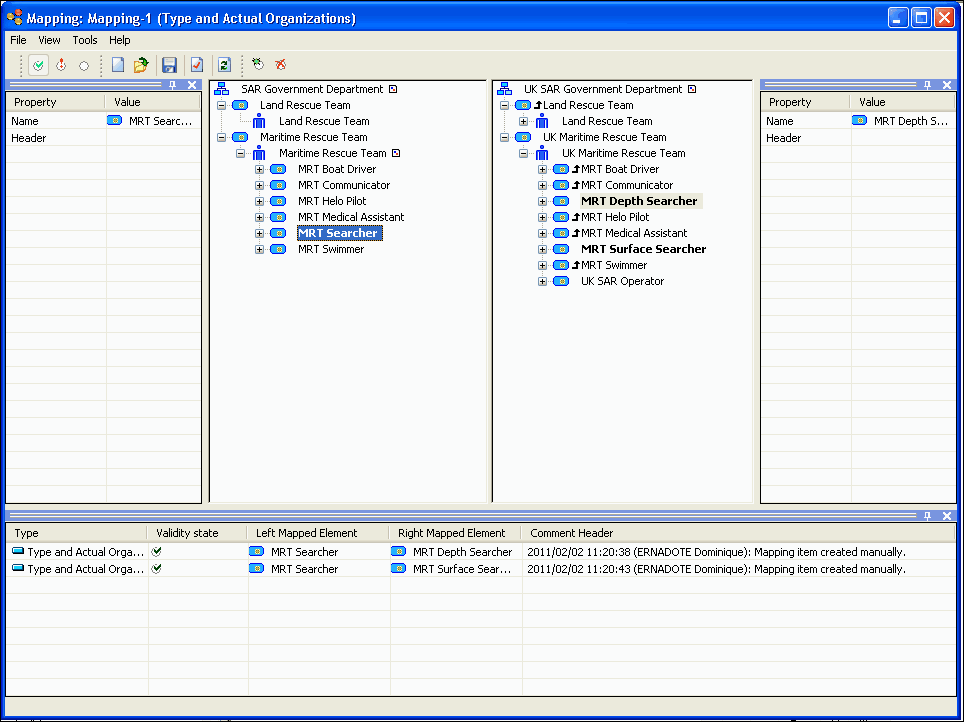
In the figure below, the two middle columns contain the generic and the actual org-units: "types" to left and "actual" to the right. The generic "SAR Government Department" organization is mapped to the "UK SAR Government Department" (mapping not indicated) and the "MRT Searcher" org-unit component type is mapped to the "MRT Depth Searcher" and the "MRT Surface Searcher" org-unit components.
 To verify if a mapping exists for an org-unit type, right-click the type and click Locate. If no mapping exists, the Locate command is grayed.
 The Org-Unit Type and Actual Organizations Mapping Overview chapter includes:
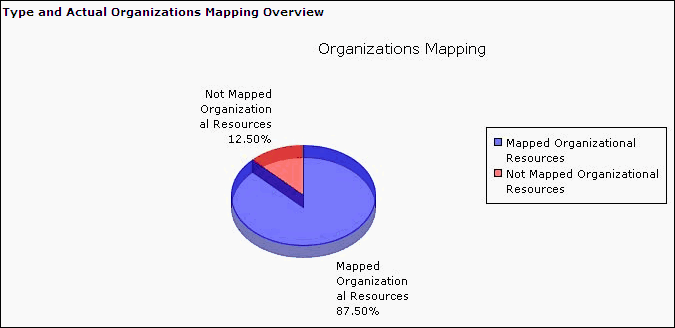
• a pie chart that indicates the percentage of mapped and unmapped organizational resources.
• a list of the organizational resources of the architecture
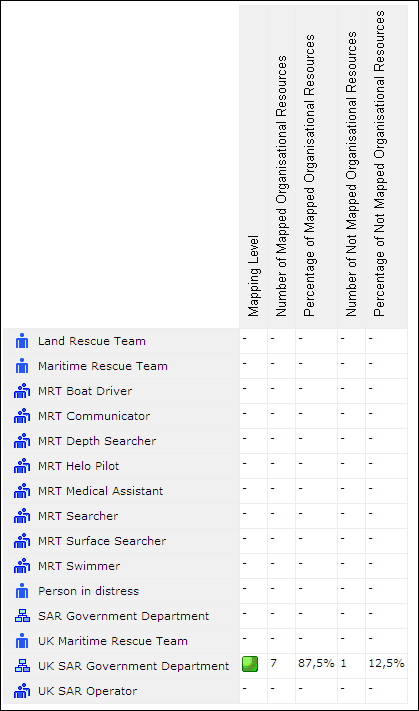
• a table that displays the mapping for the highest level of organizational resources (the organization).
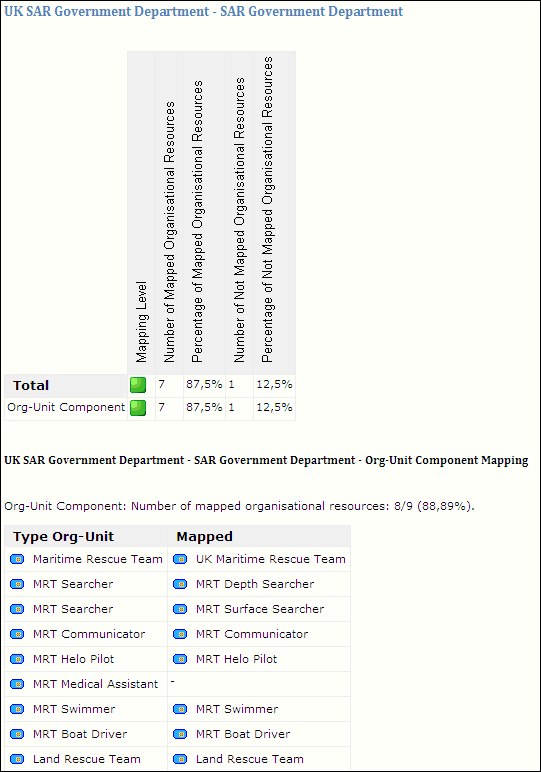
The figure below shows that mappings exist for the "UK SAR Government Department" organization: 7 org-units are mapped, which account for 87.5% of the organization's organizational resources.
The NOV-4 Type and Actual Organizations Mapping Details Chapter
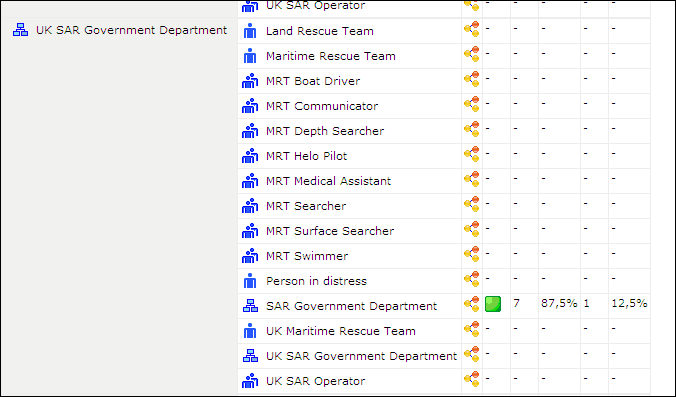
This chapter gives more details of the mapping between the org-unit types and the actual organizational resources.
It shows the mapping levels of the different org-unit types with their actual organizations. This information is presented in table form.
In the figure below, the "UK SAR Government Department" organization is mapped to the "SAR Government Department" type.
The NOV-4 Type and Actual Organizations Mapping Deep Details Chapter
This chapter gives deep details of the mapping between the organization type and the actual organization. A list of the mapped organizational resources is provided.
In this chapter each organizational resource (org-unit) has a dedicated paragraph with a table that indicates its mapping with a type.
The mapped organizational resources (org-unit components) of this organizational resource are indicated with their corresponding type.
The figure below indicates the mapping between the organizational resources of an organization with the corresponding org-unit types.