The NOV-2 Report Template
NOV-2 reports are generated from the NOV-2 report template.
It is structured to analyze the architecture to which it is associated.
However, additional and optional parameters called Subsets can be used to restrict the scope of the report. T
• Operational Node Subset: This parameter can be set with interactions, operational nodes and diagrams. The type of values used for the parameter determines the scope of the report:
• Operational Node: only the specified operational nodes are considered. Embedded operational nodes are excluded. All incoming and outgoing interactions are included as well as the targeted operational nodes. The process of operational node collection is not reiterated on operational nodes found from interactions.
• Interaction: These are the interactions that exist between operational nodes. Only the specified interactions are considered and source and target operational nodes are included.
• Diagram: Operational nodes and interactions displayed in the diagrams are included. The diagrams must be described in the architecture analyzed.
• Resource Type Subset:
 This parameter can be set with applications, artifacts, org-units, resource architectures.
The type of values used for the parameter determines the scope of the report. If no parameter is set, all the applications, artifacts, org-units and resource architectures are included in the report.
• Application: Only the specified applications are considered for the report.
• Artifact: These artifacts are the physical assets of the system that are neither applications or organizational elements.
• Org-Unit: These can be humans or simply organizational elements. They can be internal or external to the enterprise.
• Resource Architecture: These resource architectures are combinations of the physical assets and organizations used to provide a capability.
The NOV-2 Operational Node Composition Hierarchy Chapter
This chapter gives a view of the operational node hierarchies.
Operational Node Tree Diagrams are displayed with the complete structure, taking into account the optional scope.
The NOV-2 Operational Node Specialization Hierarchy Chapter
The NOV-2 operational node specialization hierarchy chapter shows how the operational nodes of the architecture are specialized.
The operational nodes are presented in a table along with their comments and the library to which they belong.
If a variant of an operational node is created, the varied operational node is presented in the table along with its variant.To create new specializations (variants), use the New > Variant command on the operational node to be varied (specialized).
The NOV-2 Operational Node Generalization Hierarchy Chapter
The NOV-2 operational node generalization hierarchy chapter shows how the operational nodes of the architecture are generalized.
The operational nodes are presented in table form along with their comments and the library to which they belong. If a variant of an operational node exists, this variant is also presented in the table along with the varied operational node (operational node from which the variant was created).
To add a new generalization, use the Connect > Variant Of command of the specialized item (variant).
The NOV-2 Operational Node Dictionary Chapter
The Operational Node Dictionary lists the operational nodes defined in the architecture in an alphabetical table. This enables the retrieval of items for which the names are known.
It also displays the Operational Node Structure diagram for the different operational nodes.
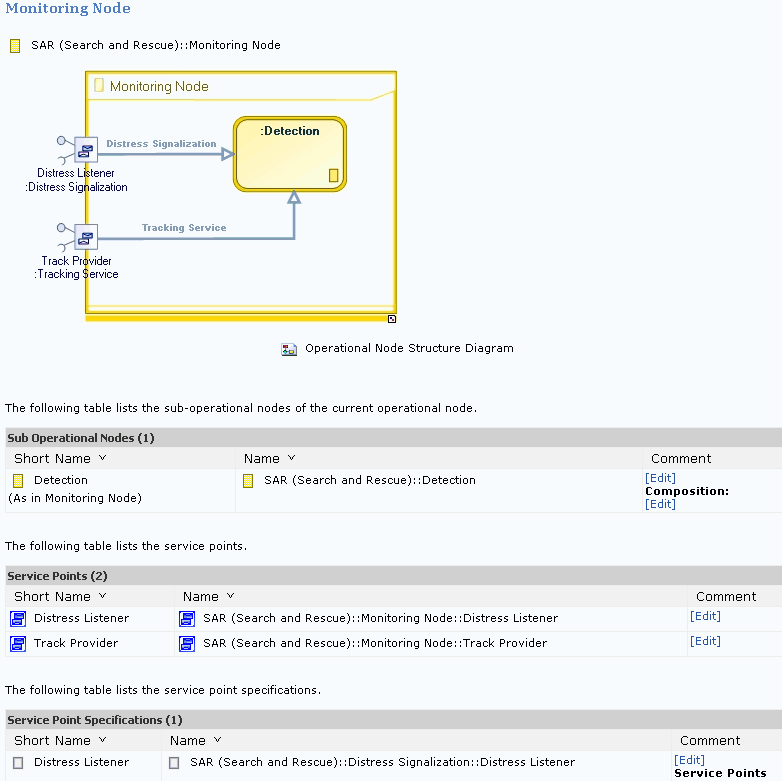
Example of Operational Node Dictionary Chapter with Diagram
The NOV-2 Operational Node Exchange Chapter
This chapter lists the needs that exist for the exchange of information from specific operational nodes to others.
Depending on the scope defined (or the default scope: the entire architecture), the report lists a set of needlines as well as the source and target operational nodes.
For each needline, the exchanged information is also listed.
The structure diagrams in which the different needs are defined are displayed.
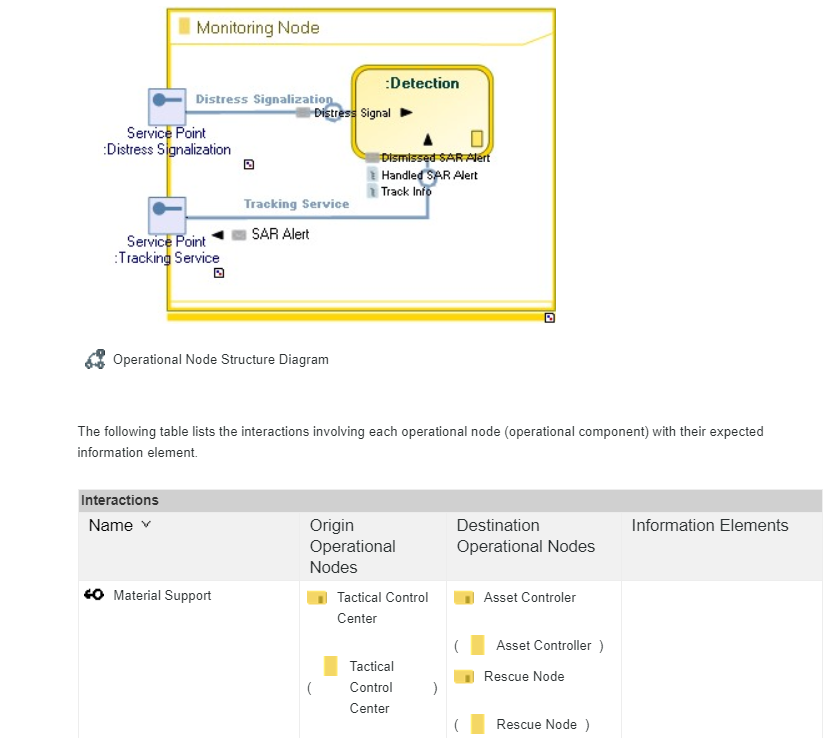
Example of an Operational Node Exchange Chapter
The NOV-2 Operational Node Exchange Balance Chapter
This chapter is used to verify that the exchanges defined between operational nodes are correctly designed.
All the incoming and outgoing exchanges of the operational nodes are compared and examined to reveal missing as well as unnecessary information for the exchange design.
The report lists all the internal and outside messages and interactions that detail the selected operational nodes.
The NOV-2 Operational Node Exchange Compliance Chapter
The Operational Node Exchange Compliance chapter indicates the level of compliance between the need to exchange information from one operational node to another and the information actually exchanged through the implemented missions.
Activities supported by the operational nodes actually exchange information within the context of designed missions. This information is compared with the need defined in the needlines/interactions. Missing or unexpected information is detected.
This chapter relies on the nodes defined in the NOV-2 view as well as the functional processes that describe how missions are performed.
These processes are described in detail in NOV-5, however, a brief description is necessary to aid in understanding the content of this chapter.
A node structure does not indicate how missions are performed. It only describes the nodes involved in the mission and how they are structured. Through interactions, you can guess the potential information exchanges that occur between nodes.
To add a dynamic perspective to nodes, a process must be described (see the NOV-5 view). This process is composed of activities that exchange information. Information is actually exchanged in the process while the node structure only describes the ability to perform such exchanges.
Activities are performed under the control of the operational nodes.
The Operational node exchange compliance report identifies three states for the information exchange:
• Information Exchange Correctly Designed: an information item is defined at both the node and the process levels.
• Missing Information: an information item can potentially be exchanged between two nodes, however, there is no process available to perform this exchange. The question is therefore, whether the interface described between the two nodes is still useful.
• Unexpected Information: an information item is exchanged in a process between two activities, however, there is no interaction between the nodes carrying out the activities. The question is therefore, should the information be exchanged in this manner in the process and must the interaction be reviewed to depict the ability to make such an exchange.
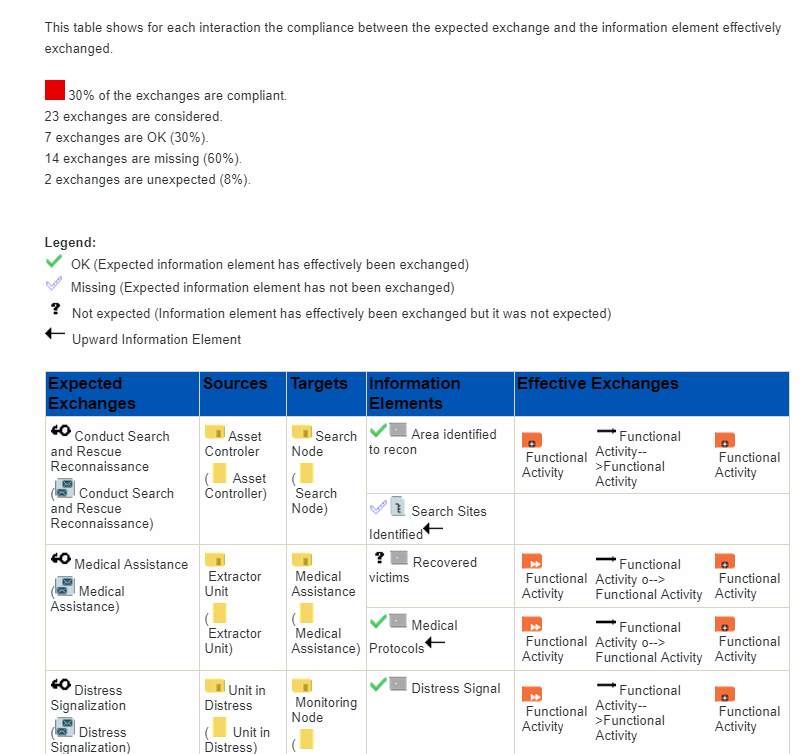
Example of an NOV-2 Operational Node Exchange Compliance Chapter
The NOV-2 Operational Node Realization Chapter
The NOV-2 Operational Node Realization chapter displays in a matrix, the resources (human and non human) responsible for performing the activities required for an operational node.
The matrix displays:
• resource items in columns
• operational nodes in rows.
Checkmarks appear in the matrix to show where a particular resource is used for an operational node. You can add and remove checkmarks in the matrix.