The NAV-3a NAF Regulation Compliance Chapter
This chapter shows to what extent architecture items are compliant with the regulations that are specified for them. It presents the compliance information in charts with statistics.
Several levels can be defined for the modeling rules:
• Suggestion: verification of this rule is not mandatory. As such, this rule only applies in the rules application report.
• Recommendation: this rule must be respected. If not an alert (warning) will be displayed.
• Requirement: this rule must be respected. If not an error signal will be displayed.
 Rules of the "Suggestion" level are not taken into account for object validity definition. They therefore have no influence on the state indicator shown in diagrams or navigators.
Understanding the statistic results
When the compliance of an object with a particular rule has been checked and the object complies with the rule, the status is marked as OK. If the object does not comply with a particular rule, it takes the rule level that has been defined for the rule (suggestion, recommendation or requirement).
An assessment is then carried out on the object with all the rules that are attached to it.
• If the object does not comply with at least one "requirement" rule, the object is given the Failure status.
• If the object complies with all its set "requirement" rules and does not comply with at least one "recommendation" rule, it is given the Recommendation status.
• If the object complies with all its set "requirement" and "recommendation" rules but does not comply with at least one "suggestion" rule, it is given the Suggestion status.
• If the object complies with all its set rules, it is given the OK status.
Contents of the report
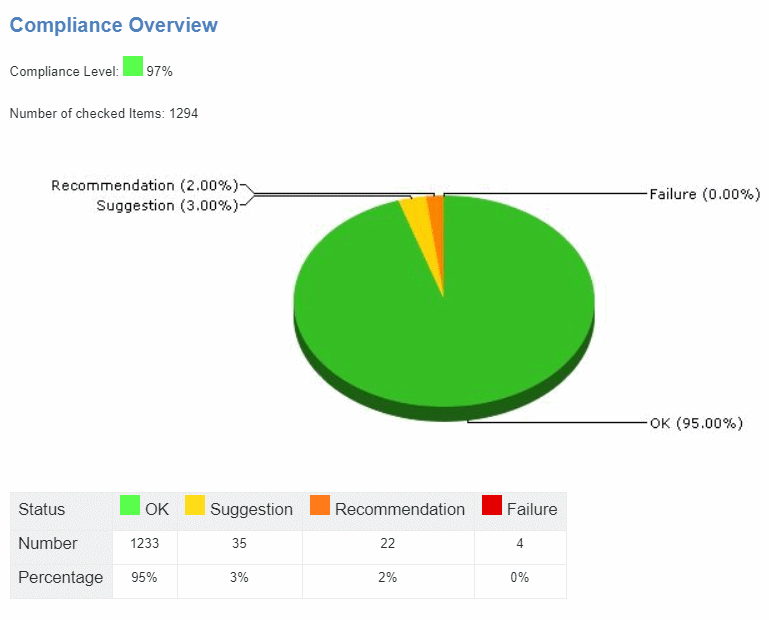
The NAF Regulation Compliance report begins with an overview of the level of compliance of architecture items with the regulation rules.
This section displays the following statistics:
• The global percentage of object compliance. Depending on the percentage value a colored square indicates the degree of compliance
• The number of objects checked
• A pie chart with the status percentages: OK, Suggestion, Recommendation, Failure
• A table with the number and percentage of objects with the different rule compliance statuses.
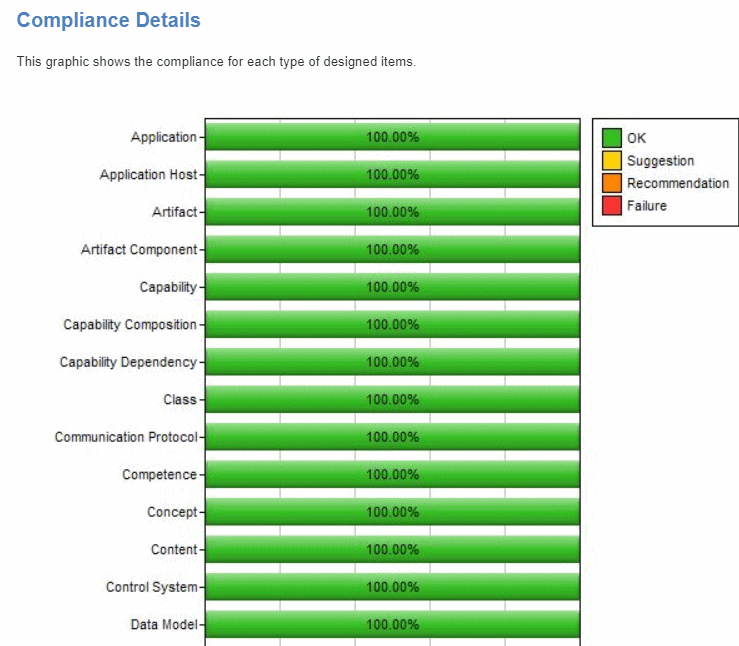
The next section details the level of compliance for the different types of architecture objects.
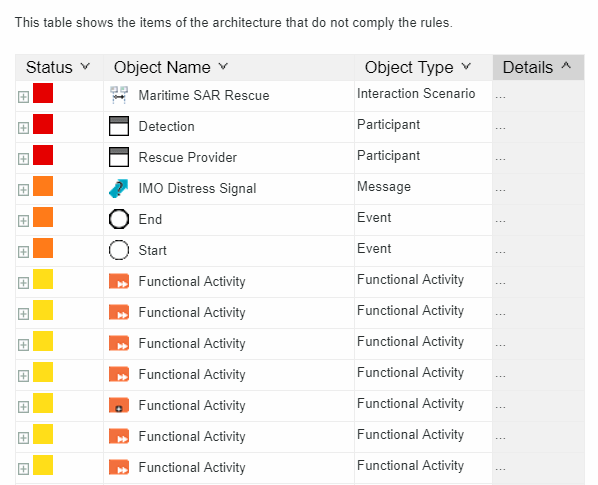
The final section of the chapter is a table which gives details about the architecture items that do not have the OK status.