Reduced Synchronization Strategies (Logical > Physical)
At synchronization from an object, the three strategies below can be applied.
Impact of synchronized object on other objects
This strategy enables definition of synchronization scope from the source object, with the possibility of extending this to all objects dependent on the source object and likely to be affected by its modification.
Example
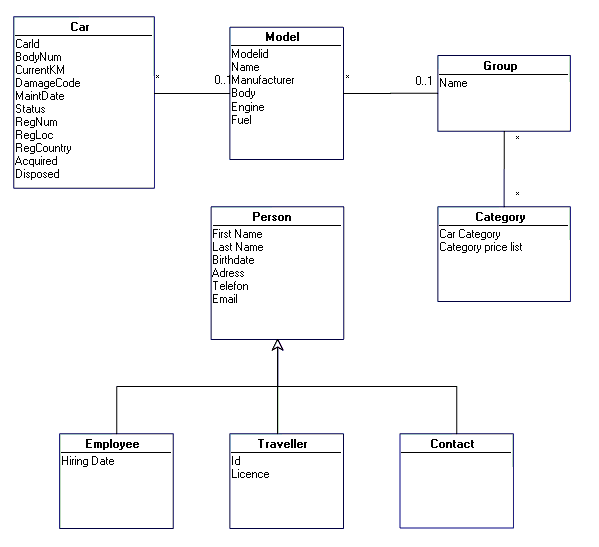
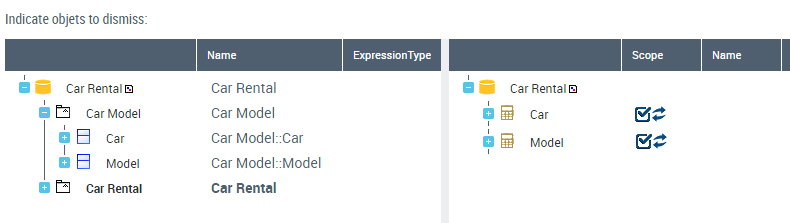
With this strategy in the model below, reduced synchronization of the "Model" entity allows inclusion of the "Car" entity, which has a constraint association to the "Model" entity.
Logical model
Reduced synchronization results
Impact of other objects on synchronized object
This strategy enables integration in reduced synchronization scope of objects on which the source object directly depends, for example all objects associated with the source entity which are necessary for update of the corresponding table.
Example
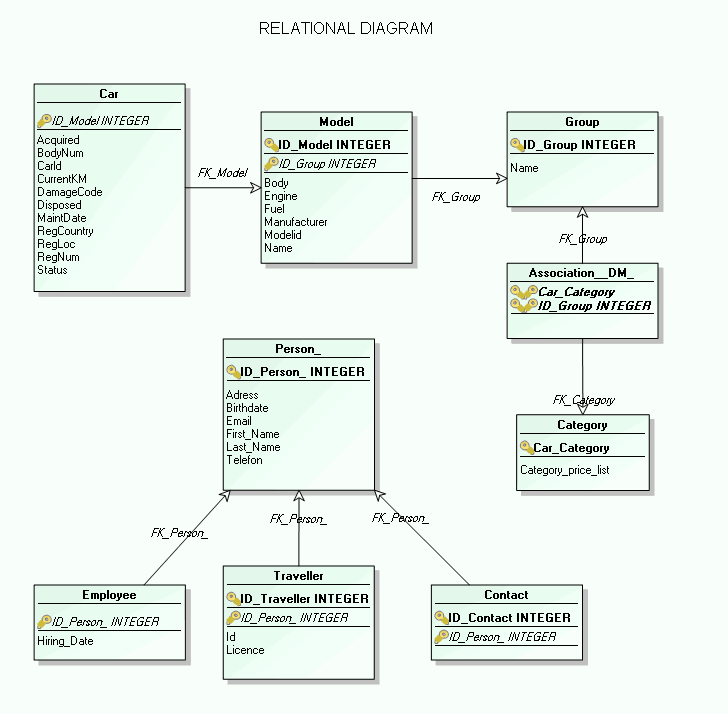
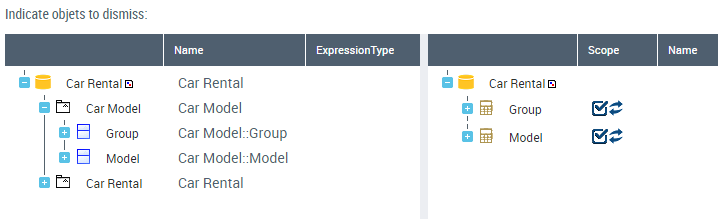
In the same example as before, taking the "Model" entity as source of reduced synchronization, the scope extends to the "Group" entity since tables corresponding to these two entities are linked by a foreign key: the "Group" entity can modify the "Model" table associated with the "Model" entity via the intermediary foreign key "FK_Group" (see diagram below).
The "Car" entity however is not taken into account in the scope since it cannot act on the "Model" table.
Physical model
Reduced synchronization results
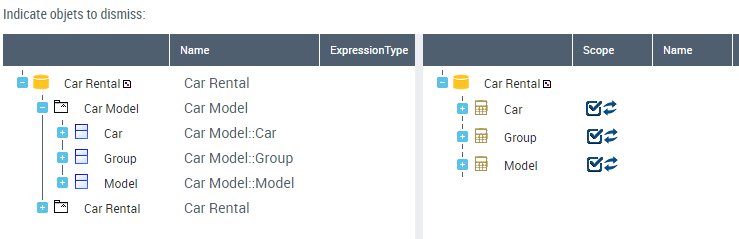
All impacts
This strategy allows a combination of the two strategies described above. Scope of reduced synchronization is extended to objects required by the source object, and to all objects likely to be affected.
Example
Reduced synchronization results
See also:
