Basic TID Concepts
Within the described scope, the TID shows:
• the networks used to send information and connect client workstations to servers.
• for each site, the servers where the applications and databases are installed.
• the workstations and their installed applications and databases.
• the network nodes such as printers, modems, etc. These nodes can be connected to each other or to servers.
• the sites where networks, servers, workstations and other types of hardware are installed.
• the information flows exchanged by applications, databases, and external org-units. These messages can be sent across a network.
• the external org-units that send or receive messages used by applications.
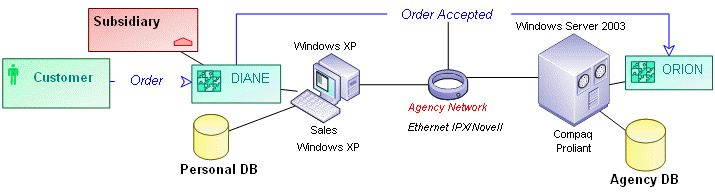
Organizational elements: org-units, etc.
A TID can be enhanced by adding organizational elements.
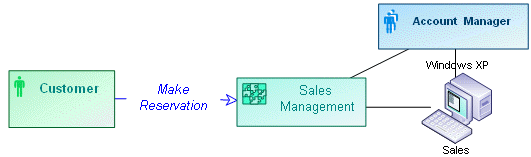
• For example, you can indicate the org-units that use an application across the network. This application must be accessible from the org-unit workstation.
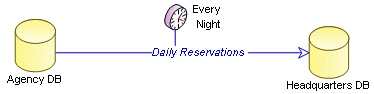
• If a message describes a file transfer, you can use a timer to indicate when to transfer this file.
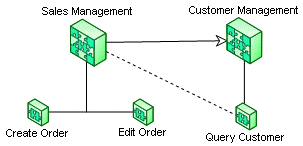
Distributed processing
You can distribute processing between a client application and a server application. You can indicate which services on the application server are used by the client.
Specialization
You can indicate sub-types for org-units, sites and messages.