Analyzing the Functional Coverage of the Architecture Implemented
The goal of this step is to check the adequacy between the expected functionalities and the architecture elements that deliver them.
Analyzing the functional coverage of the application architecture
The aim here is to connect the functionalities, which correspond to what is expected to achieve the objectives, to the means of implementation represented by applications or application systems.
 An application system is an assembly of other application systems, applications and end users interacting with application components to implement one or several functions.
By constructing the functionality map on the one hand and the application system environment on the other hand, you can check that the functionalities are implemented by application components.
 For more details on how to associate a functionality with an application component, see Describing Implementation of a Functionality.
HOPEX IT Architecture provides a report that presents the result of the implementation of business capabilities by logical or physical applications (or application systems).
For more details on how to associate a business capability with an application, see Creating a business capability realization.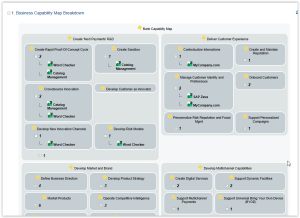
Example of a map for the implementation of capabilities by applications
Analyzing the Functional Coverage of the Application and Hardware Architecture
The aim is to connect the functionalities, which correspond to what is expected to achieve the objectives, to the technical means of implementation represented by : serversor devices.
An IT Server is an IT component providing a service to users connected via an IT network. This IT component can house databases and run applications.By constructing the Functionality map on the one hand and the application technical architecture on the other hand, you can check that the functionalities are implemented by technical components.
An application technical architecture describes one of the configurations possible for application deployment. It describes how the different technical areas of the application are connected to each other and the technologies and the communication protocols that they use. An application can have a number of possible technical architectures (E.g.: autonomous installation, horizontal or vertical deployment, etc.)For more details on technical elements, see Describing Technical Architecture.HOPEX IT Architecture provides a report that presents the result of the implementation of functionalities by computing devices.
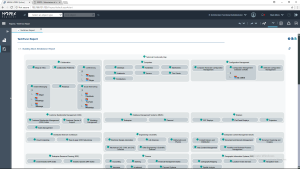
Example of a map of functionalities implemented by technologies
For more details on how to associate a functionality with technical component, see Describing Implementation of a Functionality.